Monday, March 27, 2017

A Big White Nightmare

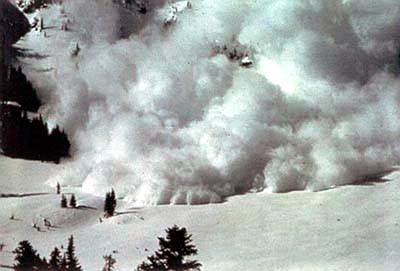
    Monday, March 27th, a fatal tragedy stuck suddenly 100 miles north from Tokyo, Japan. Just below the 6,300 foot peek of Mount Chausu, at a ski resort, about 60 high school students were training how to avoid avalanches for the annual early-spring climb. These students were involved in a mountaineer club at one of the seven high schools from Tochigi Prefecture. According to their website, the school district has one of the top mountaineering clubs, and won an award for competitive climbing 8 years running.
    During their three day excursion, the area experienced an unusual amount of snow fall. The weather bureau had issued an avalanche warning a day earlier,on Sunday, but the students were just urged to use caution. According to the Tochigi branch of the Japanese national weather service, warmer temperatures on Monday made the mountain unstable. While training for the climb, one survivor claims "everything turned white." The avalanche occurred quickly and left about 40 people injured and 8 dead. The branch of the Tochigi Government that is responsible for dealing with natural disaster stated that all the victims were men, and found with out vital signs. The weather conditions made it difficult for emergency helicopters to land at the scene of the avalanche.
    As a result of this tragedy, the board of education had changed the rules for the mountaineer club. For now on, the students are to only practicing on much lower and safer hills. Personally I believe that the club should not be a part of their high schools at all. It seems to me like this club is extremely unsafe, and the people in charged are not particularly worried about the lives of the kids involved. For instance, they were well aware of the avalanche warning, yet they continued to allow hiking on the mountain. It is a shame that it took a tragedy like this to make the school realize their journey's can be a great risk. How ever, in this moment, they were extremely unlucky. Together, the clubs have become more sorry and less safe. For the full story, you can read more here.
https://www.nytimes.com/2017/03/27/world/asia/japan-avalanche-tochigi-deaths.html?_r=0


https://commons.wikimedia.org/wiki/Avalanche
 "Avalanche." Avalanche - Wikimedia Commons. N.p., n.d. Web. 27 Mar. 2017.  https://commons.wikimedia.org/wiki/File:Rogers_Pass_avalanche_disaster_5_March_1910.jpg

 
 Soble, Jonathan. "Japan Avalanche Kills 8 Teenage Mountaineers on School Trip." The New York Times. The New York Times, 27 Mar. 2017. Web. 27 Mar. 2017.
 

Wednesday, March 8, 2017

The Greenpeace USA Discourse Community.

1.) "A discourse community has a broadly agreed upon set of common public goals."
    The common public goal for Greenpeace is quite obvious. They are on a mission to expose environmental issues globally, as well as promote solutions to these problems. The problems they are working on include saving the arctic, protecting forest, fighting global warming, protecting oceans, living toxic-free, promoting sustainable food, and defending democracy. Greenpeace hopes to promote these solutions in order to create a more peaceful/safe environment/planet.
2.) "A discourse community has mechanisms of intercommunication among it's members.
    One of the community's mechanisms of intercommunication includes Green Wire. On this website they share upcoming events, emails, and members to communicate with in the organization.The discourse community of Greenpeace also attend meetings, rallies, and marches.
3.)"A discourse community uses it's participatory mechanisms primarily to provide information/feedback."
     The discourse community of Greenpeace has multiple blogs. In the blogs, they have topics on news/media, events, groups, and members. In order to view the member's blog, you must first become one. Then you are able to share your thoughts/information with other member's of the community.
4.) "A discourse community utilizes and hence possesses one or more genres in the communicative furtherance of it's aims."
     Aside from their meetings, blogs, marches, and rallies, the community also shares it's information via twitter, face book, youtube, instagram, and emails.
5.) "In addition to owning genres, a discourse community has acquired a specific lexis."
    On their website they refer to different items as "green." For example, "green internet". Not many people would understand this if they were outside of the Greenpeace community. However, green internet involves environmentally safer, and less energized technology to reduce environmental impact. They also include a section on the website that is titled "movement news". Almost self explanatory, but this section includes news that involves Greenpeace. Movement news makes you feel a certain type of way, whether it's positive or negative, it effects your feelings. Another lexis that they have is "front line." This stands for the people of the Greenpeace community that publicly fight for their goals.
6.) "A discourse community has a threshold of members with a suitable degree of relevant content and discourse expertise. 
    In the discourse community, Greenpeace has a wide range of members. They include members, interneships, volunteers, the front line, board members, and issue experts. Their issue experts include 17 members both male and female. Together, they possess a wide range of back rounds that include science, law, politics, and advocacy.
https://upload.wikimedia.org/wikipedia/commons/thumb/6/69/Greenpeace_logo.svg/2000px-Greenpeace_logo.svg.png
"File:Greenpeace Logo.svg." File:Greenpeace Logo.svg - Wikimedia Commons. N.p., n.d. Web. 08 Mar. 2017. 
 https://www.flickr.com/photos/dinocom/3275714010
Alves, Dinho. "An. Greenpeace _ "Woman Nature"." Flickr. Yahoo!, 13 Feb. 2009. Web. 08 Mar. 2017.
Check it out! 
  "Greenpeace USA." Greenpeace USA. N.p., n.d. Web. 08 Mar. 2017.
http://www.greenpeace.org/usa/

"Home | Greenpeace Greenwire USA." Home | Greenpeace Greenwire USA. N.p., n.d. Web. 08 Mar. 2017.
https://greenwire.greenpeace.org/usa/en/

Monday, March 6, 2017

The Storm Shall Rise With The Temperature.

    Heat waves, hurricanes, earth quakes, volcanoes, tsunami's, and many more natural disasters happen on our planet today. In nature, shifts in the weather or temperature may cause these disasters to happen more frequently. Today, we are faced with the problem of global warming. The overall increase of earth's temperature has a direct link with these disasters. In this blog post, I will discuss the natural disaster of a hurricane.
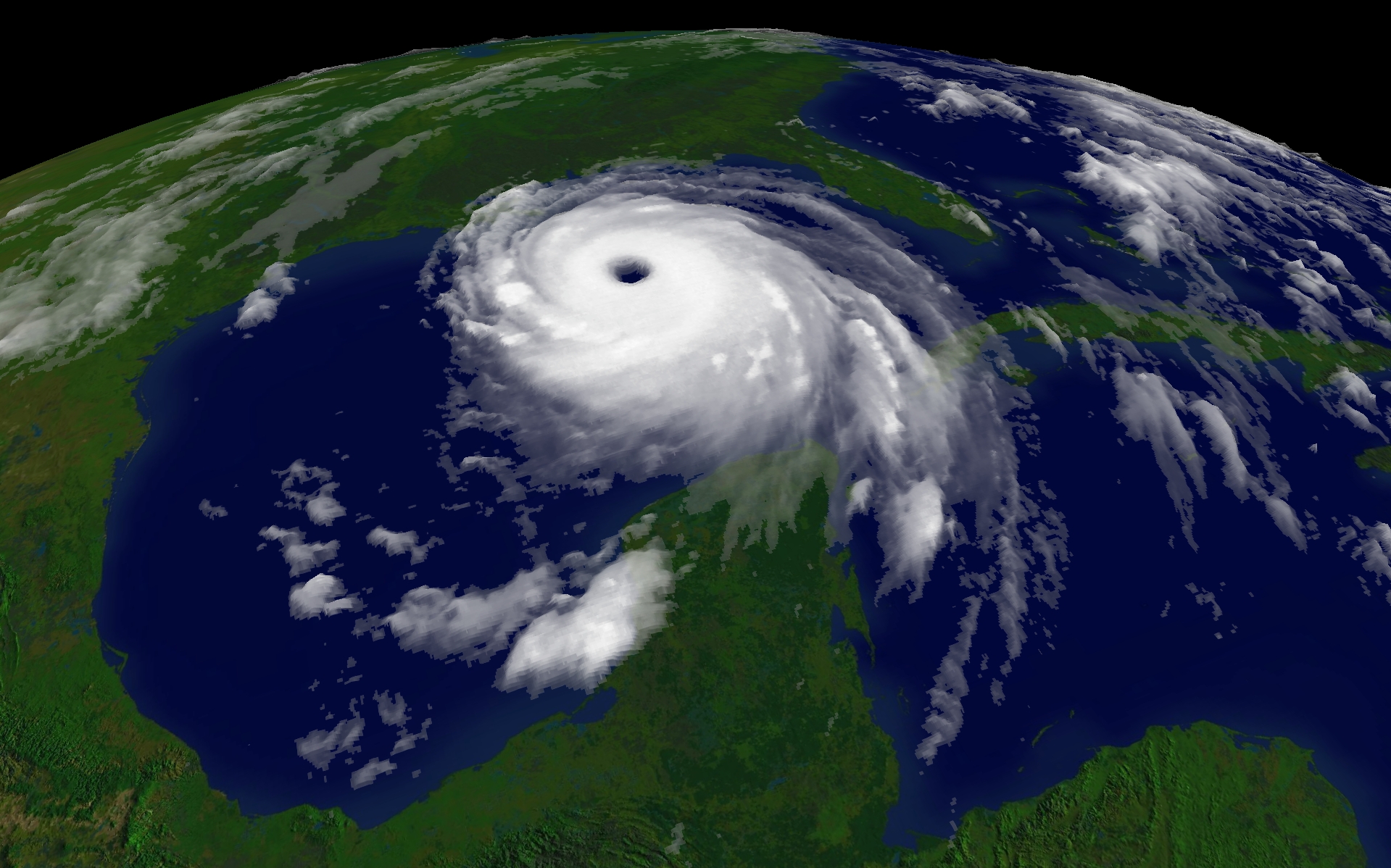
    A hurricane is a violet, cyclonic, tropical storm that brings an abundance of rain fall, as well as high winds. ("Hurricane"). The wind speed of the storm could excess to up to 72 miles per hour, much faster than you can legally drive down the high way. Hurricanes are important because they significantly create tons of damage to an area, as well as bring many deaths. Hurricanes are emotionally, physically, and economically damaging. They are mostly local to the southern coast of America, in places like the Gulf of Mexico, or the Caribbean Sea. The Atlantic Hurricane season starts June 1st and ends November 30th. During these months, citizens and scientist must be on high alert for one of these disasters.
     However, global warming has been around since the industrial revolution. It is a growing phenomenon and is starting to become more recognized/important today. The climate changing and becoming warmer has a direct correlation with hurricanes. Hurricanes gain their speeds and energy from warm water. Therefor, the increase in the hurricane activity is linked to the warmer ocean temperatures. Scientist project that hurricanes intensity and frequency will continue to expand along with earth/ocean temperature rising. Also, because the ice glaciers are melting, the sea level is rising. This could lead to very severe flooding the next time a storm approaches. According to the International Panel on Climate Change, they predict that global warming will cause sea levels to rise from .11 all the way to .77mm by 2100. Because of this, smaller storms may create just as much damage as larger storms. If we do not try to put an end to global warming or take action to reduce it, then we, as humans, will have to suffer through these natural disasters, such as a hurricane.


"Hurricane Katrina." Wikipedia. Wikimedia Foundation, 03 Mar. 2017. Web. 06 Mar. 2017.
https://upload.wikimedia.org/wikipedia/commons/6/6f/Katrina-noaaGOES12.jpg
https://upload.wikimedia.org/wikipedia/commons/a/aa/US_Navy_050709-N-0000B-002_A_Navy_security_team_eases_their_way_through_water_and_debris_at_NAS_Key_West%5Ersquo,s_Truman_Annex_as_Hurricane-
_Dennis_passes_the_southernmost_tip_of_the_base_Saturday_morning.jpg
"Understanding the Link Between Climate Change and Extreme Weather." EPA. Environmental Protection Agency, 19 Oct. 2016. Web. 06 Mar. 2017.
https://www.epa.gov/climate-change-science/understanding-link-between-climate-change-and-extreme-weather
 Center, National Hurricane. "National Hurricane Center." National Hurricane Center. N.p., 01 Jan. 2001. Web. 06 Mar. 2017.
   http://www.nhc.noaa.gov/
 "The Impact of Climate Change on Natural Disasters." NASA. NASA, n.d. Web. 06 Mar. 2017.
  http://earthobservatory.nasa.gov/Features/RisingCost/rising_cost5.php
 "Hurricane." Dictionary.com. Dictionary.com, n.d. Web. 06 Mar. 2017.
http://www.dictionary.com/browse/hurricane

Wednesday, March 1, 2017

The Good and Bad Qualties of a Short Documentary.

    I chose to watch a video documentary on global warming and natural disasters. The title is called " A News Show About Climate Change and Natural Disasters",  and it is presented by "The Atlantic" website. In this five minute video the women shares important world news about these two pertaining factors. She mentions disasters that include rain, snow, and dust all the way from Asia to Europe, and then North America. In the beginning she mentioned global warming's correlation with natural disasters, but didn't elaborate on that specific topic until the end of the video. Included in this short documentary is a few good and bad qualities.
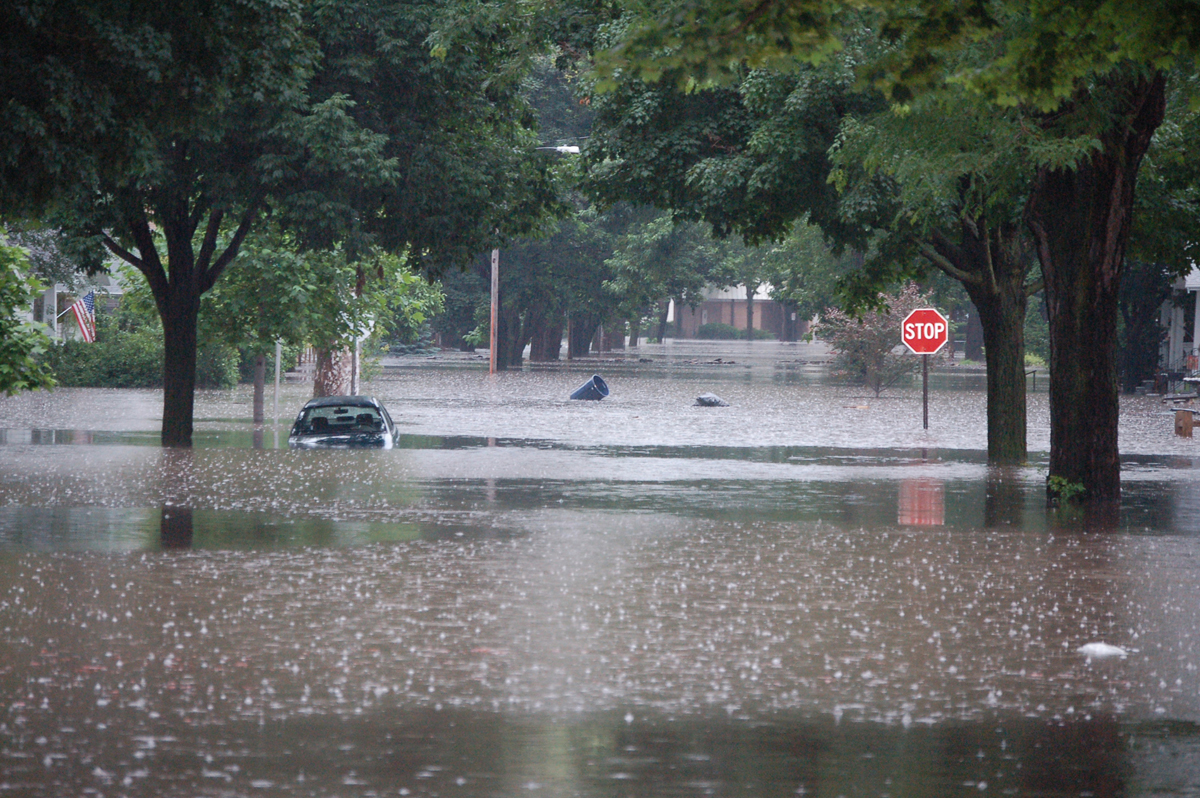
    She begins the video describing a flood in Thailand that has killed many people, over 500 in fact. She also shares the total damage cost that is predicted to be about 4 million. She states her sources from getting this information and they were credible. Along with describing the incident in Thailand, the video includes good and precise visuals to see the real damage.
    I believe it is important for us to know about extreme weather all around the globe. Although, the women began the video by describing Thailand, I believe she should of started with the problems of natural disasters in the U.S then moved onto other countries. How ever, she was still successful in presenting the information to us. Not only did she describe what the disaster was, but also how it effected the people and community of the particular area. I also believe that it would of been effective for her to describe how they deal with the natural disaster before it hits, but she described the aftermath frequently.
    Towards the end of the video the women says that certain regions around the globe will experience more violent weather in the future. However, she does not specify what regions that will be. After this, the video finally begins to describe the correlation between climate change and natural disasters. Overall, I would not recommend someone to watch this short documentary unless they were specifically interested in natural disasters. This is because global warming isn't mentioned through out the whole video. But, the information that was presented can be considered credible and accurate.
https://www.theatlantic.com/video/index/248604/a-news-show-about-climate-change-and-natural-disasters/ 
https://upload.wikimedia.org/wikipedia/commons/3/3a/Flooding_in_the_US_Midwest_June_2008.jpg
Citation:
Baldegg, Kasia Cieplak-Mayr Von. "A News Show About Climate Change and Natural Disasters." The Atlantic. Atlantic Media Company, n.d. Web. 01 Mar. 2017.