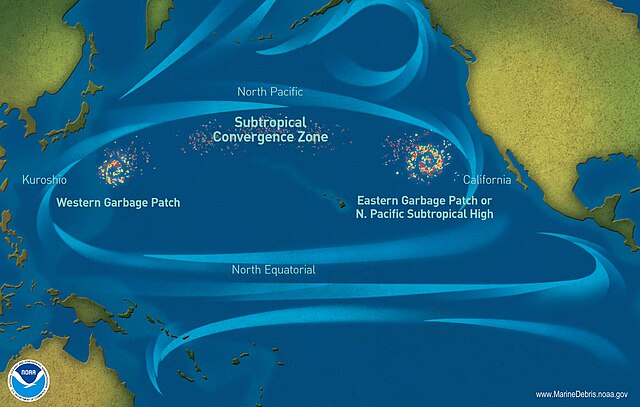
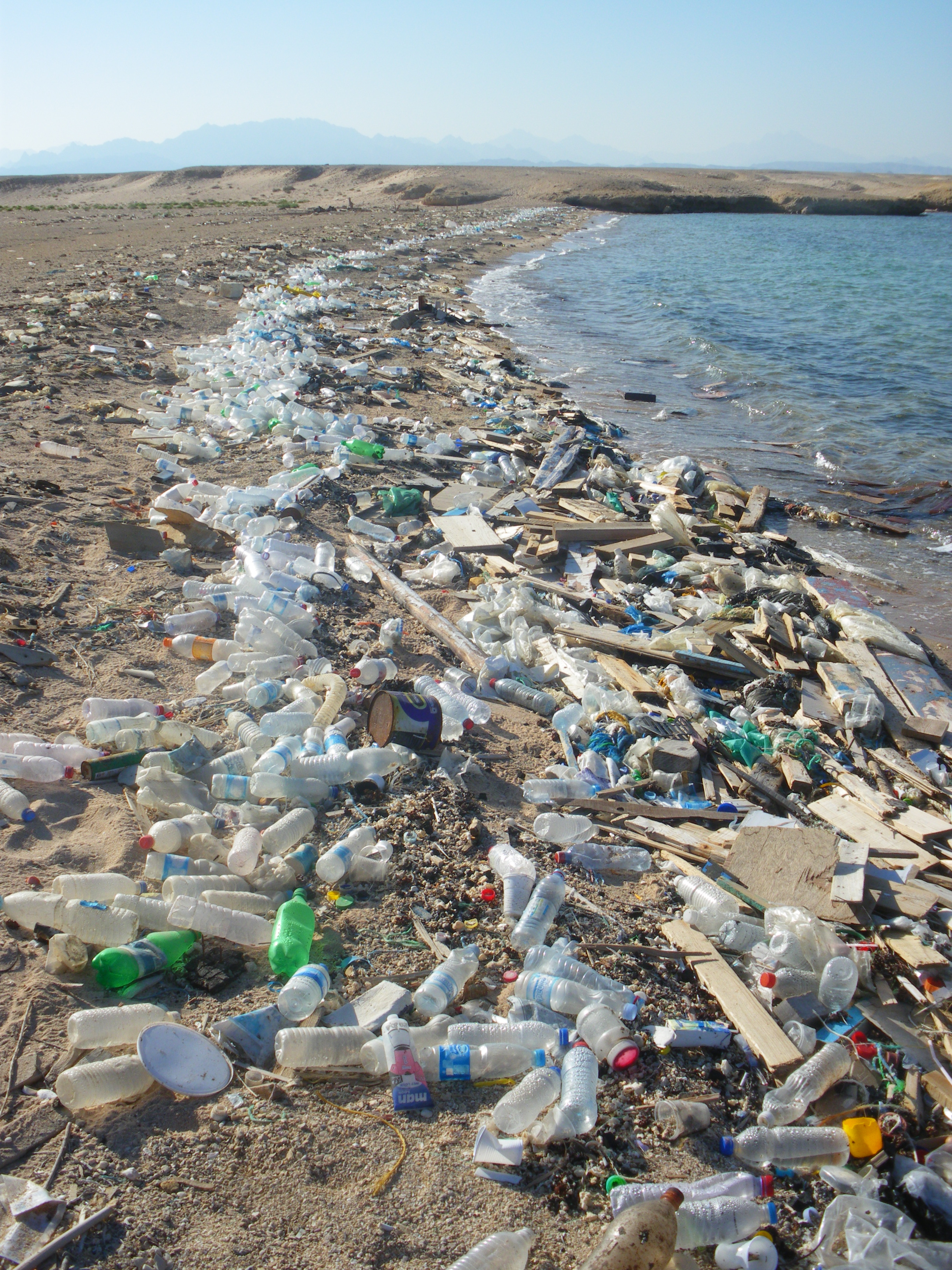
The Great Pacific Garbage patch was first discovered by oceanographer Charles Moore. He found the patch in 1997 while sailing the ocean. It is located from the West Coast of the U.S., all the way to Japan. The patch is so large because it is composed of both the Eastern, and Western patches. Their all related by the North Pacific Convergent Zone. This means warm water from the south meets with cool water from the Arctic and creates a path for the debris to travel. The spinning vortex of debris consist of 80% plastic. This is because this specific material is not biodegradable like the other pieces of trash that end up in the ocean. Over time, the plastics break down into tiny pieces called "micro plastics." Overall, the micro plastics create a murky texture to the water and integrate with larger items as well. Moore describes the patch as "minestrone, and all the little vegetables are different colored bits of plastic." ("Great Pacific Garbage Patch"). However, the top of the water isn't the only part that contains trash. Sadly, below the water contains just as much, if not more, trash. According to Oceanographers and ecologists,70% of marine debris actually sinks to the bottom of the ocean. ("Great Pacific Garbage Patch"). But, not even these experts can say how much trash actually lies within the Garbage Patch.
So, what do we do to stop this? Truth is, the power of recycling and minimizing plastic packaging can make a difference. Also, you may want to volunteer in local beach cleanups. But at the minimal, please properly dispose of your waste and keep others aware of the garbage patch! For more information please click on the hyper links!
Society, National Geographic. "Great Pacific Garbage Patch." National Geographic Society. N.p., 09 Oct. 2012. Web. 05 Apr. 2017.
Blomberg, Lindsey. "The Great Pacific Garbage Patch." Http://web.a.ebscohost.com. N.p., May-June 2011. Web. 4 Apr. 2017.

No comments:
Post a Comment